
Intermittent fasting means eating during set hours or on set days, and fasting the rest of the time. The two most common methods are 16:8, where you eat within an 8-hour window and fast for 16 hours, and 5:2, where you eat normally for 5 days and have about 500 calories (women) or 600 calories (men) on 2 days. An NHS plan for 5:2 expects a weight loss of 0.5 to 1 kg (1 to 2 lb) a week.

What is intermittent fasting?
Intermittent fasting is about when you eat, not what you eat. Most diets tell you which foods to cut out. Fasting tells you when the kitchen is open and when it is closed.
After you eat, your body runs on the sugar from that meal. After hours without food, those sugar stores run low and your body starts burning fat for energy. Johns Hopkins researcher Mark Mattson calls this "metabolic switching". It is not magic. Fasting mostly works because a shorter eating window usually means fewer calories over the day.
People have fasted for religious and cultural reasons for centuries. What is newer is using it as a planned weight-loss method, and that is where the research is still catching up.
What are the 16:8 and 5:2 methods?
There are many fasting schedules, but two are used most often.
16:8 (time-restricted eating). You fast for 16 hours and eat all your meals within an 8-hour window. A common window is 12 pm to 8 pm, which usually means skipping breakfast. Another is 10 am to 6 pm. This is the easiest method to start with, because most of the fast happens while you sleep. Our free intermittent fasting calculator works out your eating window and fast end time for you.
5:2. You eat normally for 5 days a week. On 2 days, you cut down to about 500 calories if you are a woman, or 600 calories if you are a man. That is roughly a quarter of a normal day. The NHS advises not to pick two fasting days in a row, and not to overeat on the normal days, or the plan will not work.
| 16:8 | 5:2 | |
|---|---|---|
| How it works | Eat in an 8-hour window every day | Eat normally 5 days, low-calorie 2 days |
| Fasting days | Every day (mostly overnight) | 2 non-consecutive days a week |
| Calories on fast days | No set limit | About 500 (women) or 600 (men) |
| Good for | People who like routine | People who prefer fewer, harder days |
Both methods aim at the same thing: eating less over the week. Neither one tells you which foods to eat. That part is still up to you.
Does intermittent fasting actually work?
For weight loss, it seems to work about as well as a normal diet. In one two-month study reported by the US National Institutes of Health (NIH), adults who fasted every other day and adults who cut calories every day were equally likely to lose about 7 kg (15 lb). Fasting does not burn fat faster than ordinary calorie cutting. It simply makes eating less easier for some people.
The honest picture is more careful than the headlines. The NIH notes that most fasting research has been done in cells and animals, and that there is still a lot we do not know about fasting in people. It also notes that people who regularly fast for more than 16 to 18 hours a day have a higher risk of gallstones.
So set your expectations by the NHS figure: 0.5 to 1 kg (1 to 2 lb) a week. Anyone promising 5 kg (11 lb) in a week is selling you something, not science.
What can you eat and drink while fasting?
During the fast, keep to drinks with no calories: water, black coffee and plain tea. If you must have milk in your tea or coffee, count it. The NHS plan says to count about 50 calories for every 100 ml (about 3.4 fl oz) of milk, which matters on a 500-calorie day.
In your eating window, eat like you would on any healthy diet. The NHS Eatwell Guide recommends at least 5 portions of fruit and vegetables a day. As a rough guide, women need around 2,000 calories a day and men around 2,500, but your own number depends on your size and activity. Use our free calorie calculator to find yours, or read how many calories you should eat a day.
On 5:2 fast days, the NHS suggests protein-rich foods such as eggs, chicken, prawns or tinned tuna rather than bread and biscuits, because protein keeps you feeling full for longer.
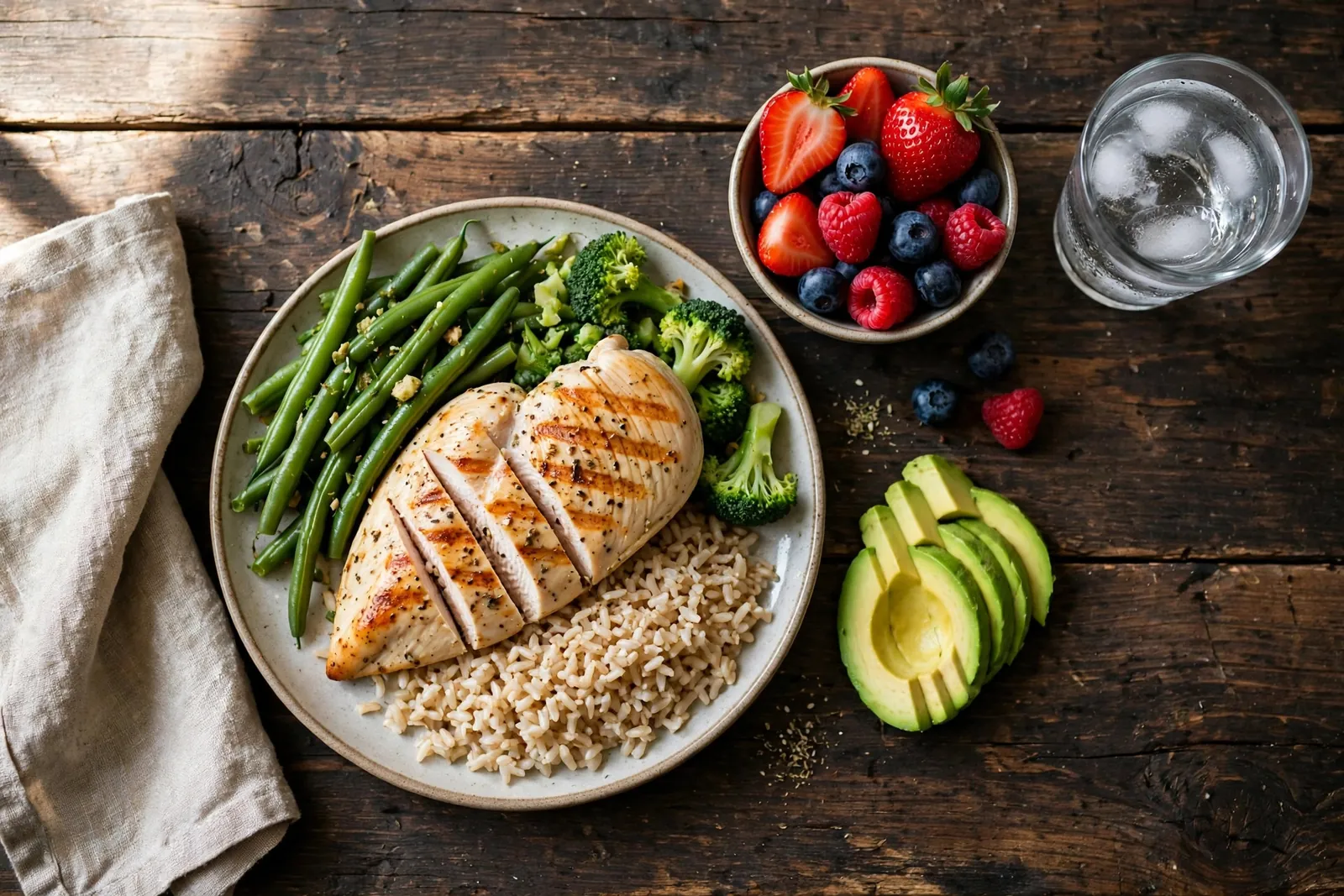
Fasting does not cancel out junk food. If your 8-hour window is full of takeaways and sugary drinks, you will not lose weight. The window controls when you eat. What you eat still decides the result.
Who should not try intermittent fasting?
Fasting is not for everyone. Johns Hopkins advises these groups not to try it:
- Children and teenagers under 18.
- People who are pregnant or breastfeeding.
- People with type 1 diabetes who take insulin.
- Anyone with a history of an eating disorder.
If you have diabetes and take any medicine for it, speak to your doctor first. Skipping or delaying meals can change how your medicine works. The same applies if you take any medicine that must be taken with food, or you have a long-term health condition.
Stop and get medical advice if you feel faint, dizzy or unwell while fasting. Feeling a little hungry is normal in the first days. Feeling ill is not.
How do you start intermittent fasting safely?
Start with 16:8. Pick an 8-hour window that fits your day, not someone else's. If you work early, 10 am to 6 pm may suit you better than 12 pm to 8 pm. Eat your normal meals inside the window for the first week and do not try to cut calories at the same time.
Give your body time to adjust. Johns Hopkins says it can take 2 to 4 weeks before the body gets used to fasting, so judge the plan after a month, not after three days.
If you try 5:2, keep the two fast days apart, plan your small meals in advance, and drink plenty of water. A simple fast-day pattern is a small protein breakfast, a salad with chicken or fish at lunch, and a light evening meal.
Do not stack changes. Do not start fasting, a new workout plan and a new diet on the same day. Change one thing, see how you feel, then build on it.
How do you track your progress?
Weigh yourself once a week, at the same time of day, and write it down. Daily weigh-ins jump around too much to be useful. Also track your waist measurement, your energy and your sleep. The scale is only one number.
Track what you eat for at least one week. Many people find their "normal" days quietly grow bigger once fasting starts, and that wipes out the deficit. If you have questions along the way, the NutriPath AI nutrition coach can look at your own food logs and suggest changes. If your weight has not moved for 3 to 4 weeks, check your portions on the non-fast days first.
Intermittent fasting is a tool, not a cure. Used carefully, it can make eating less simpler to live with. The method that works is the one you can still follow in three months.
This guide is general information for healthy adults. Do not fast if you are pregnant, breastfeeding, under 18 or have a history of an eating disorder. If you have diabetes, take regular medicine or have a health condition, talk to your doctor or a registered dietitian before you start. Outside of planned 5:2 fast days, do not eat under 1,200 calories a day (women) or 1,500 (men) without medical supervision.


